
A Practical Parking Lot Maintenance Plan for Southeast Michigan
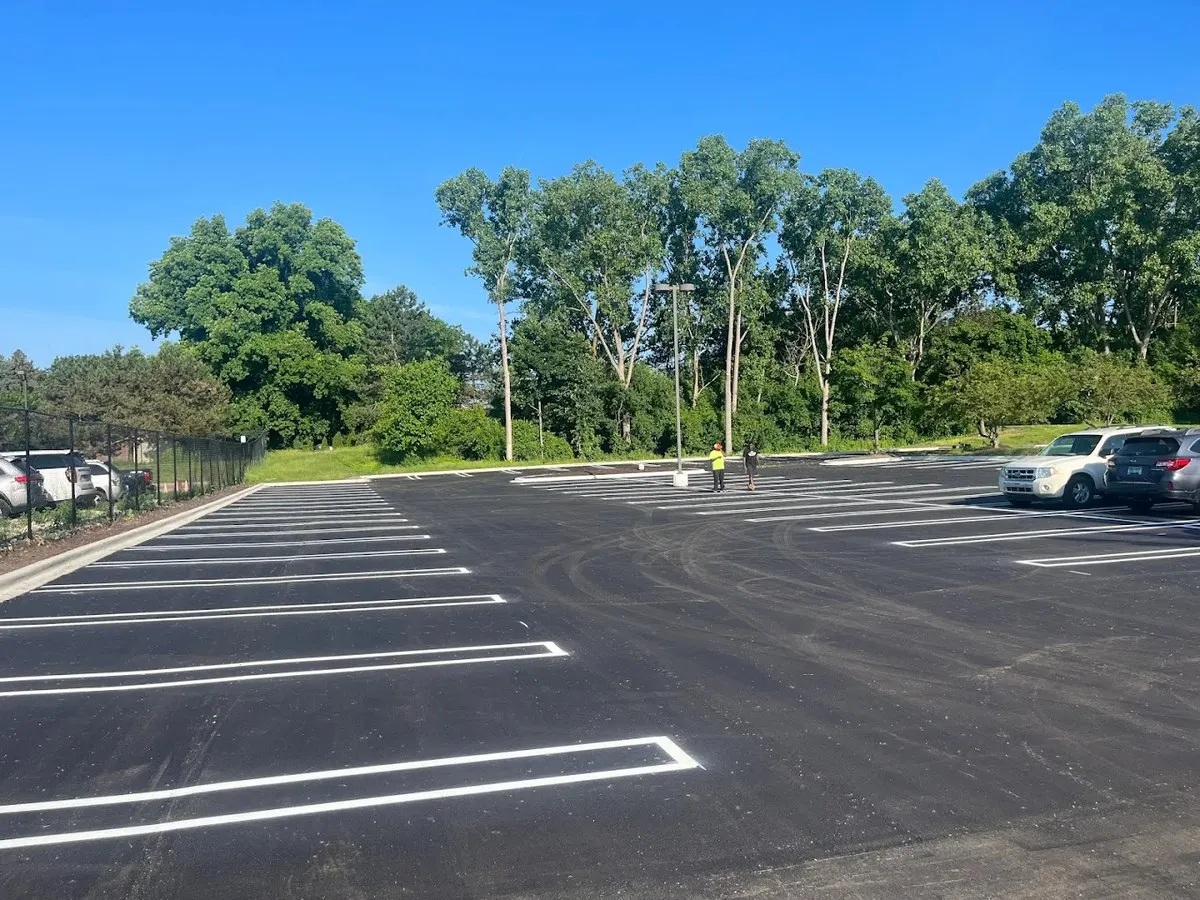
A good parking lot maintenance plan in Michigan comes down to four steps: inspect on a set schedule, repair small damage early, keep water moving off the pavement, and book sealcoating only on asphalt that is still sound. Do the inspection in October, if weather and crew availability allow paving work, and you can go into a Southeast Michigan winter with a short, ranked list of observed problems.
Start with a repeatable lot inspection
Walk the whole lot the same way each time, ideally with a printed site plan or a phone photo of the layout. Walking beats driving because you see edges, drains and hairline cracks that a windshield hides. Pick the same months each year so you can compare condition over time.
Look for these items on every pass:
- Cracks, noting whether they are thin hairlines or open enough to fit a finger or a pencil.
- Potholes and soft spots where the surface flexes or crumbles underfoot.
- Loose or broken edges along curbs, islands and the lot perimeter.
- Areas where water sits after rain, often called ponding.
- Pavement joints, where separate asphalt sections meet, for gaps or separation.
- Faded striping and worn spots near entrances, dumpsters and loading areas.
Write down where each problem is and what it looks like. A note such as "crack along north row of stalls, thin, about the length of two spaces" is more useful than "cracks in back." Next time, you can see what changed and rank repairs by how fast they are moving.
Address damage before it spreads
Water can contribute to a small crack developing into a pothole. It gets under the surface, can soften the base (the compacted stone layer that supports the asphalt), and then traffic can break the weakened pavement apart. Sealing or filling cracks while they are narrow can require less effort and money than rebuilding a failed area later.
Match the fix to the damage
Patching and crack repair handle localized damage. If you see a few potholes, a broken edge or a handful of open cracks, asphalt repair is often the right first call. If cracking looks like a web across a whole section, or the surface sinks and flexes, the problem may be in the base, and a broader assessment is worth having.
| What you see | Likely direction | Why |
|---|---|---|
| A few open cracks or small potholes | Asphalt repair | Damage may be local; the surrounding pavement needs assessment |
| Faded, dry surface with minor hairline cracking | Repair cracks, then sealcoating | Sealcoating protects asphalt that is still in good structural shape |
| Alligator cracking, sinking or flexing areas | Paving assessment | These signs may indicate base failure, which a surface treatment cannot fix |
| Whole lot worn out across most stalls and drive lanes | Full parking lot paving discussion | Repeated patching may stop making sense when failure is widespread |
Know what sealcoating does and does not do
Parking lot sealcoating is a protective coating that slows water and sun damage on sound asphalt. It does not repair a failed base, and it will not hold up over loose, crumbling areas. Repair first, seal second, so the coating covers pavement that can carry it.
Keep water moving
Check catch basins and drains for leaves, trash and silt, especially after leaves fall. If a spot holds water more than a day after rain, mark it. Persistent ponding can speed up cracking and, in freezing conditions, can become a patch of ice. A contractor can tell you whether the fix is cleaning, regrading or replacing that section.
Plan for Southeast Michigan weather
Michigan winters bring snow, plowing and freeze-thaw cycles, typically from December into March. Water that enters a crack can freeze and expand, widening the opening. When it thaws, more water flows in, and the cycle repeats. Plow blades can add wear on top of that.
That is why October is a good time for your main inspection. Paving work depends on weather, and as temperatures drop, many asphalt plants and crews slow down or stop for the winter. If you find repairs in October, you may have time to get them looked at and scheduled before cold weather limits what a crew can do. Waiting until a January thaw may limit your repair options.
The same sequence applies to lots in Belleville, Canton and Ann Arbor, but your lot will have its own conditions. If your site has low corners, long runs of pavement or heavy delivery traffic, check those areas for signs of wear. If your lot has clay soil or poor drainage under it, base problems can show up sooner. Treat these as things to check, not assumptions, since every lot differs.
Make the next inspection actionable
An inspection only helps if it ends in decisions. Before you call anyone, sort your notes into three groups: urgent (potholes, trip hazards, loose edges), soon (open cracks, ponding, joint gaps) and watch (hairline cracks, fading). Add the location and condition of each item, plus any changes since the last walk.
Then ask a paving contractor three direct questions:
- Is each problem a repair, a sealcoating candidate or part of a larger paving scope?
- Which items should be handled before winter, and which can wait until spring?
- Is the base sound under the areas that look worst?
Use the answers to set priorities before November. Keep the notes and photos in one file, and the next walk in spring will show you how the lot came through the winter.
We offer a free estimate for lots around Belleville and across Southeast Michigan. Bring your inspection notes and ask whether they can be reviewed with you, area by area.
Common questions
When should I repair cracks in an asphalt parking lot?
As soon as you can after you spot them, and ideally before freezing weather starts. Narrow cracks may be candidates for filling, and filling them can reduce water reaching the base.
What should be on a commercial parking lot maintenance checklist?
Cracks, potholes, loose edges, ponding, drains, pavement joints and striping. Record the location and condition of each so you can compare from one inspection to the next.
Can sealcoating fix a parking lot with a failed base?
No. Sealcoating protects asphalt that is structurally sound. Areas that sink, flex or show widespread cracking often need repair or a larger paving scope first.
Areas we serve
Our services
Have a question about your project? Call (734) 672-0289